Egypt To Grant Visa Access To 250 Pakistani Businesses
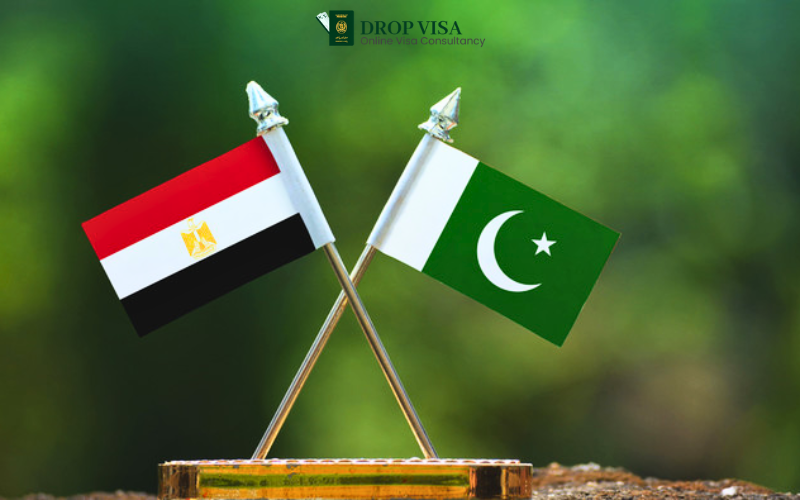
In a major development for regional economic cooperation, Egypt has agreed to offer facilitated visa access to 250 Pakistani business houses in the first phase of a broader economic engagement plan. The initiative marks a major leap toward strengthening trade, investment, and private-sector connectivity between Pakistan and Egypt.
This announcement came during the two-day official visit of Egyptian Foreign Minister Dr. Badr Ahmed Mohamed Abdelatty to Islamabad (November 29–30, 2025), where both nations reviewed their full spectrum of bilateral relations. The decision reflects a long-term strategic roadmap designed to enhance business mobility, unlock new trade potential, and deepen collaboration across high-growth sectors.
A Two-Phase Visa Facilitation Program
Under the first phase, 250 Pakistani business entities will receive streamlined and expedited visa access to Egypt.
A second phase—already agreed upon—will expand this number to 500 business houses, enabling even broader private-sector participation.
This facilitation aims to:
-
Support Pakistani exporters and importers
-
Encourage B2B collaboration in trade fairs and investment forums
-
Simplify travel for executive-level and sector-specific delegations
-
Strengthen long-term commercial partnerships
Egypt’s business-friendly move signals its intention to integrate Pakistani enterprises into its rapidly expanding economic landscape.
Key Outcomes of the High-Level Visit
The visa announcement was one of several major economic and diplomatic outcomes of the visit. Pakistan and Egypt also agreed to:
1. Establish the Pakistan–Egypt Business Council
This platform will serve as an institutionalized mechanism to:
-
Connect leading companies from both sides
-
Promote long-term B2B partnerships
-
Facilitate trade missions, joint ventures, and investment agreements
2. Launch the Pakistan–Egypt Business Forum
The Business Forum will formally convene in Q2 2026, alongside the Joint Ministerial Commission. It will focus on:
-
Economic diplomacy
-
Trade expansion
-
Sector-driven opportunities
3. Expand Cooperation Across Multiple Sectors
Both nations have identified several high-potential sectors for cooperation, including:
-
Textiles and apparel
-
Agriculture and food processing
-
Pharmaceuticals
-
Energy and power
-
Logistics and shipping
-
Construction and infrastructure
-
Information technology and digital services
These sectors align with Pakistan’s export portfolio and Egypt’s investment priorities.
Strengthening Educational and Cultural Ties
During the meetings, Egypt also announced a significant educational commitment:
Al-Azhar University will double the number of scholarships for Pakistani students.
This step will deepen people-to-people ties and expand academic collaboration between the two nations.
Strategic and Defence Engagement
The visit highlighted not only economic interests but also strategic priorities.
Dr. Abdelatty’s meeting with Pakistan’s Chief of Army Staff, Field Marshal Syed Asim Munir, underscored:
-
Defence cooperation
-
Military training programs
-
Knowledge-sharing and defence exchanges
-
Regional security and stability
Both sides reaffirmed their commitment to continued high-level defence coordination.
Focus on Gaza and Regional Security
Regional stability—especially the humanitarian crisis in Gaza—featured prominently in discussions.
The Egyptian Foreign Minister emphasized the importance of an International Stabilisation Force (ISF) with a clearly defined mandate for:
-
Ceasefire monitoring
-
Border security
-
Humanitarian accountability
He also highlighted the role Pakistan could play in Gaza’s future reconstruction.
High-Level Political Engagement
Dr. Abdelatty also met with President Asif Ali Zardari at Aiwan-e-Sadr, where both leaders reaffirmed the importance of strengthening the 77-year-old Pakistan–Egypt partnership.
Key topics included:
-
Expanding bilateral trade
-
Encouraging Egyptian investment in Pakistan
-
Enhancing economic connectivity
-
Boosting people-to-people exchange programs
Senior officials, including Foreign Minister Senator Ishaq Dar and Senator Sherry Rehman, were present during the meeting.
Commerce Minister Parallel Visit to Cairo
Adding momentum to the developing relationship, Pakistan’s Federal Minister for Commerce, Jam Kamal Khan, arrived in Cairo on November 30, 2025, to attend the Fourth D-8 Trade Ministers Council Meeting.
His engagements include:
-
Plenary sessions on regional trade
-
Bilateral meetings with Egyptian leadership
-
Cultural tours of iconic Egyptian landmarks
-
Visits to the Grand Egyptian Museum and Abdeen Palace
This simultaneous diplomatic activity reflects a fully coordinated push to elevate the partnership between the two nations.
How Pakistani Businesses Will Benefit
The new visa access program and institutional platforms will help Pakistani businesses:
-
Explore opportunities in Egypt’s growing markets
-
Establish distribution networks in the MENA region
-
Participate in joint ventures and investment partnerships
-
Expand exports through improved logistics and trade routes
-
Engage in smoother B2B transactions with reduced bureaucratic hurdles
Egypt’s strategic location—anchored by the Suez Canal—offers Pakistani exporters unique access to African, European, and Middle Eastern markets.
Key Notes
Egypt’s decision to grant visa access to 250 Pakistani business houses, with expansion to 500 in the next phase, is a transformative step for Pakistan–Egypt economic relations. Combined with new institutional frameworks, defence talks, educational cooperation, and expanding diplomatic engagement, both nations are clearly opening a new chapter of partnership.
For Pakistani businesses, this is an opportunity to connect with one of Africa’s most dynamic economies and leverage its strategic position in global trade. As both countries continue building on this momentum, their collaboration is expected to grow across economic, strategic, and cultural dimensions—supporting long-term stability, growth, and shared prosperity.
Worldwide Visa Information for Pakistani Passport: